



Last Updated: September 2026
How to Choose the Best Knee Support for Running
Running places repeated demands on your knees, and the right knee support can provide additional compression, stability, or targeted support while you stay active. But with knee straps, patella straps, sleeves, wraparound braces, and more structured knee braces available, knowing which option to choose can be confusing.
The best knee support for running depends on where you need support, how much support you prefer, your activity level, and the reason you are experiencing discomfort.
In this guide, we'll explain the different types of knee supports for runners, how they differ, what to consider when choosing one, and when it may be appropriate to speak with a healthcare professional.
Table of Contents
- What Should Runners Look for in a Knee Support?
- What Are the Different Types of Knee Supports for Running?
- Knee Strap vs. Knee Sleeve: What's the Difference?
- Can You Run With a Knee Brace or Knee Strap?
- How to Choose a Knee Support Based on Where You Need Support
- How Tight Should a Knee Support Be?
- Choosing a Cho-Pat® Knee Support for Running
- When Should You Talk to a Healthcare Professional?
- Frequently Asked Questions

What Should Runners Look for in a Knee Support?
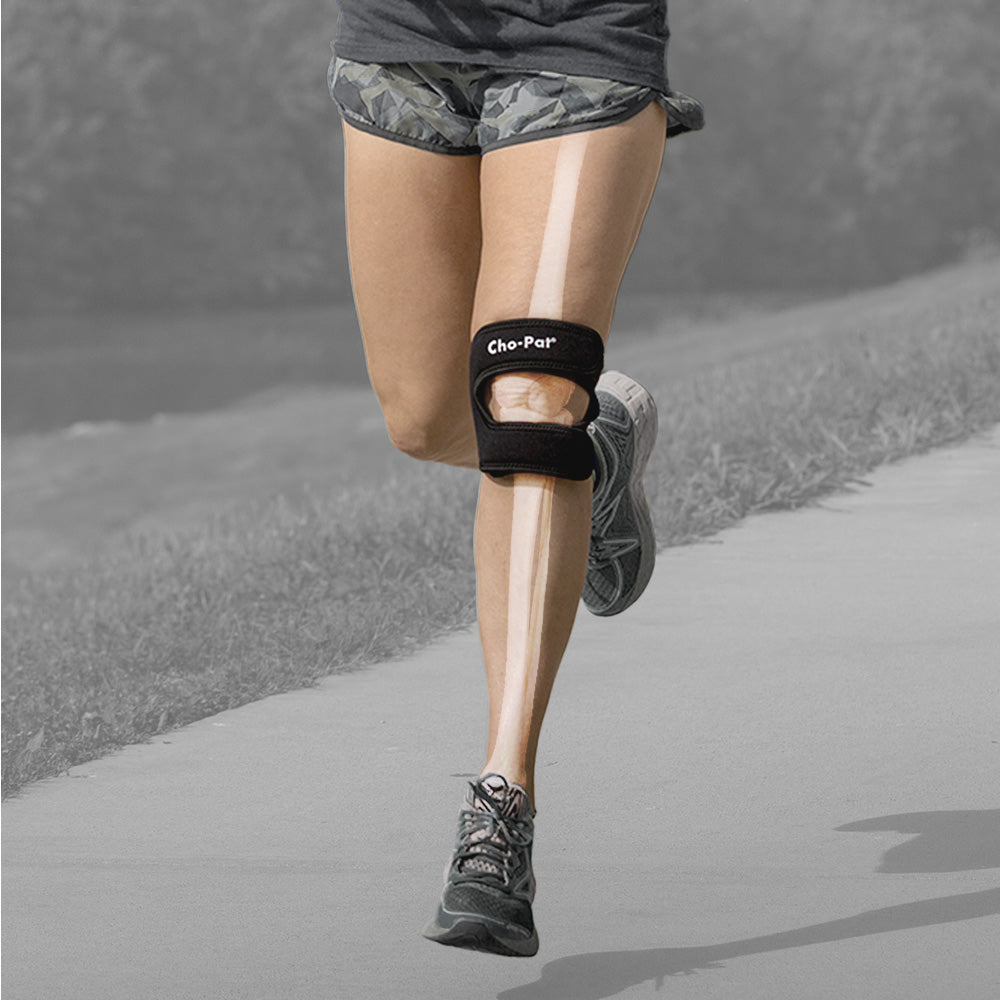
A knee support for running should provide the level of support you need without unnecessarily restricting your natural movement. Because running requires the knee to repeatedly bend, straighten, and absorb force, runners may prefer a knee support that stays securely in place while still allowing comfortable movement.
When comparing knee supports, consider the following:
- Support location: Determine whether you want targeted support below the kneecap, support above and below the knee, or broader compression around the joint.
- Range of motion: A running knee support should allow you to comfortably bend and straighten your knee during your normal stride.
- Support level: Some runners prefer lightweight compression, while others may want additional support around the knee.
- Fit: Proper sizing is important. A support that is too loose may move during activity, while one that is too tight may become uncomfortable.
- Material: Consider breathability, flexibility, and whether the material is appropriate for your preferences, especially during longer runs or warm weather.
- Activity: Your running distance, terrain, training intensity, and other activities may also influence the type of support you prefer.
The goal should not simply be to find the knee support with the most coverage. Instead, look for a design that provides appropriate support while allowing you to move comfortably.
What Are the Different Types of Knee Supports for Running?
There is no single type of knee support that is appropriate for every runner. Understanding the basic differences can make choosing one much easier.
Knee Straps
A knee strap is a relatively low-profile support that typically applies targeted compression around a specific area of the knee.
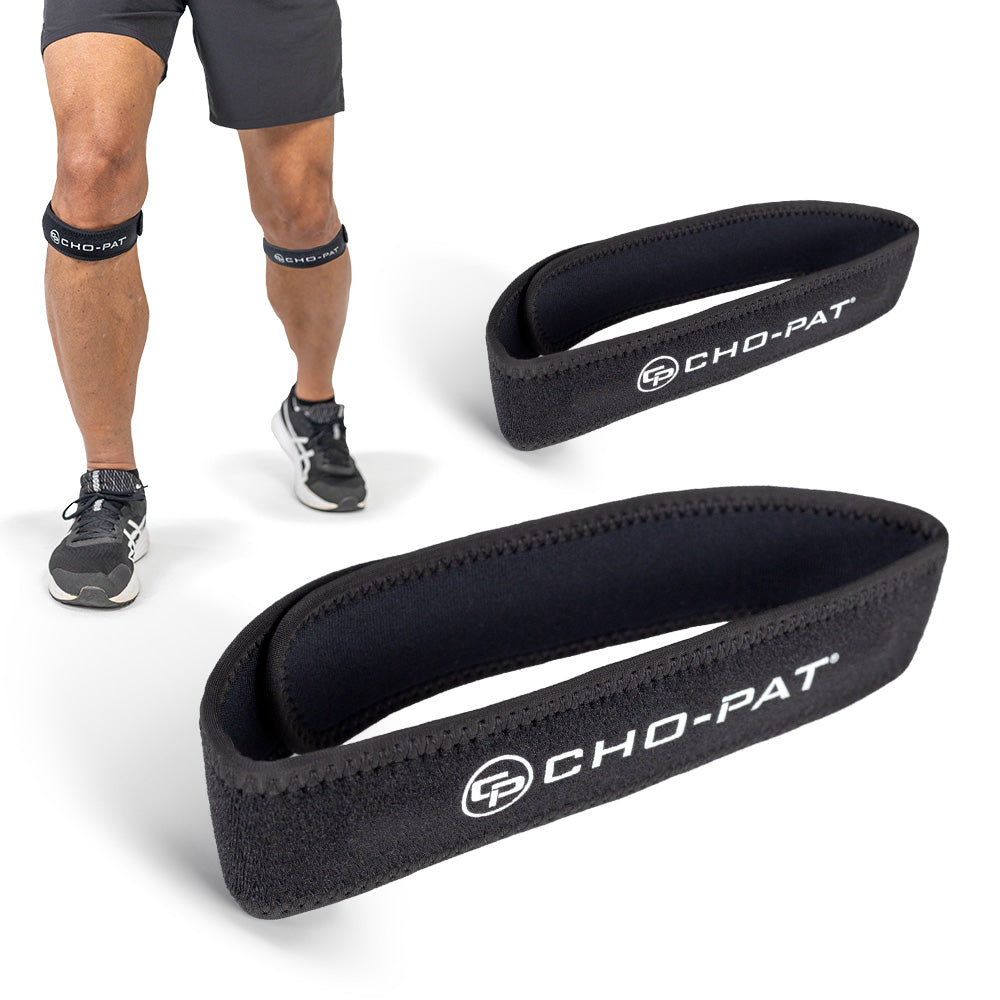
Patella knee straps are generally positioned just below the kneecap around the patellar tendon. Other knee strap designs may provide support both above and below the kneecap. Because much of the knee remains uncovered, knee straps can be an appealing option for runners who want targeted support without wearing a full knee brace.
Patella Straps
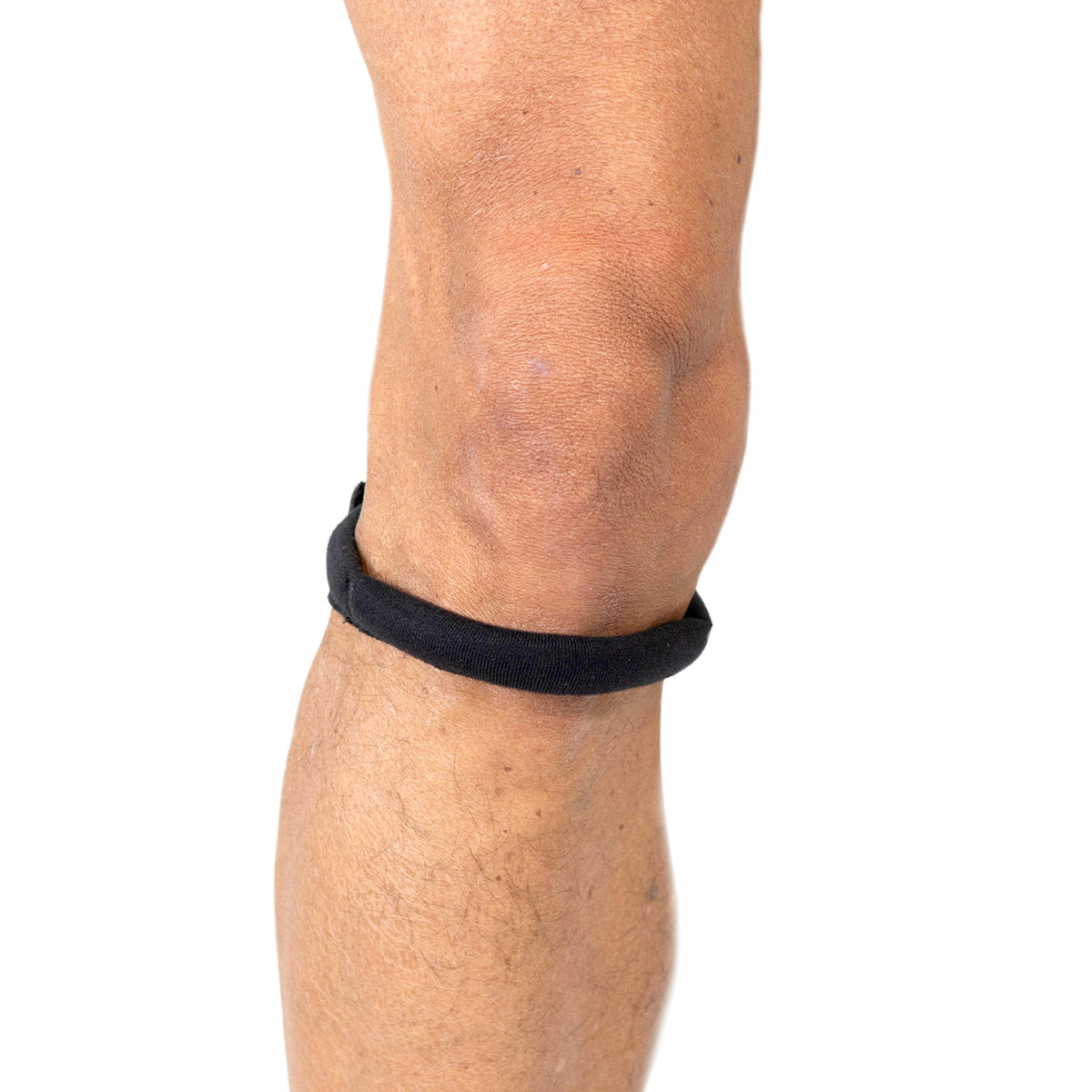
A patella strap is a type of knee strap specifically designed to be worn below the kneecap. It applies targeted compression around the patellar tendon while leaving most of the knee uncovered. This allows the knee to maintain a wide range of motion during running and other activities.
Patella straps are commonly considered by active individuals looking for focused support below the kneecap.
Knee Sleeves
Knee sleeves typically slide over the knee and provide compression around a larger portion of the joint. Unlike a targeted knee strap, a sleeve surrounds the knee and may provide a greater feeling of overall compression and warmth.
Some runners prefer sleeves because of their simple design and broader coverage. Others may prefer a strap because it leaves more of the knee uncovered.
Wraparound Knee Supports
Wraparound knee supports fasten around the knee rather than sliding over the leg. Depending on the design, they may provide adjustable compression and more coverage than a traditional knee strap.
These supports can vary considerably in construction and support level, so runners should consider how much coverage they actually need.
Hinged Knee Braces
Hinged braces are generally more structured than knee straps or sleeves and are designed to provide greater mechanical support around the knee. Because they tend to be larger and more restrictive, a hinged brace may not be necessary for someone simply looking for lightweight support during running.
If you believe you need a highly structured knee brace, consider speaking with a healthcare professional about the appropriate type of support for your situation.
Knee Strap vs. Knee Sleeve: What's the Difference?
One of the most common decisions runners face is choosing between a knee strap and a knee sleeve. The primary difference is where and how the support is applied.
A knee strap provides more targeted support. Depending on the design, it may sit below the kneecap or use straps above and below the knee. A knee sleeve covers a larger portion of the knee and provides broader compression around the joint.
In simple terms:
| Knee Strap | Knee Sleeve |
|---|---|
| More targeted support | Broader compression |
| Less knee coverage | More knee coverage |
| Typically leaves kneecap uncovered | Usually covers the knee |
| Low-profile design | Sleeve-style design |
| Available in single or dual-strap designs | Typically provides compression around the joint |
Neither design is automatically better for every runner.
If you prefer targeted support with minimal coverage, a knee strap may be worth considering. If you prefer broader compression around the knee, you may prefer a sleeve.
Can You Run With a Knee Brace or Knee Strap?
Many knee supports are designed to be worn during physical activity, including running. However, whether you should run with a particular support depends on the type of support, proper fit, and the reason you are using it.
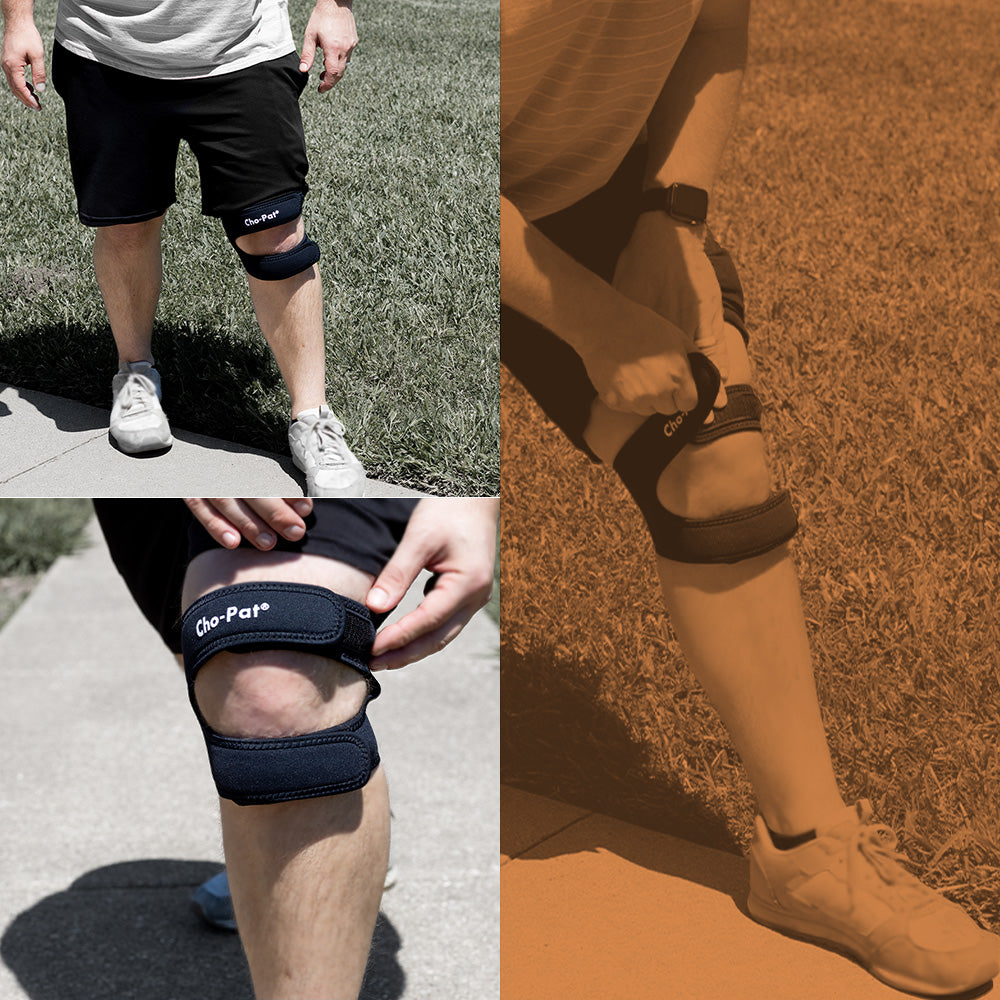
A knee strap designed for active movement should fit securely without unnecessarily restricting your running stride.
Before running with a new knee support, make sure it:
- Fits according to the manufacturer's sizing instructions
- Stays securely positioned during movement
- Does not restrict normal knee motion
- Does not cause numbness, tingling, or increased discomfort
- Is being worn according to the manufacturer's instructions
A knee support should not be used to ignore significant or worsening knee pain. If running is causing persistent pain, swelling, instability, or other concerning symptoms, stop the activity and speak with a qualified healthcare professional.
How to Choose a Knee Support Based on Where You Need Support
One of the easiest ways to narrow your options is to consider where you want the support to be applied.
Support Below the Kneecap

If you are looking for targeted support below the kneecap, a patella-style knee strap may be an appropriate design to consider. These straps are positioned around the area below the kneecap and provide targeted compression while leaving most of the knee uncovered.
Support Above and Below the Kneecap

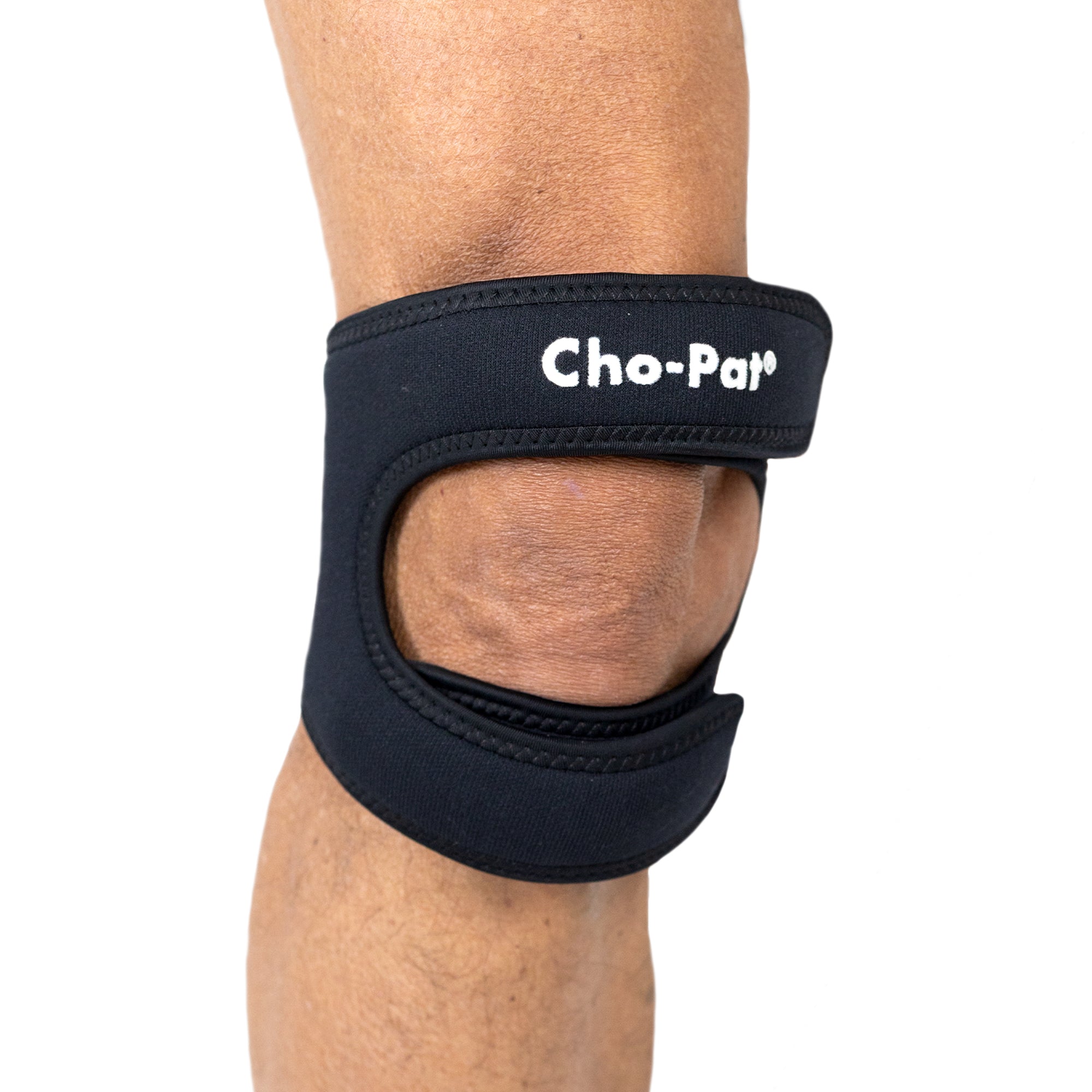
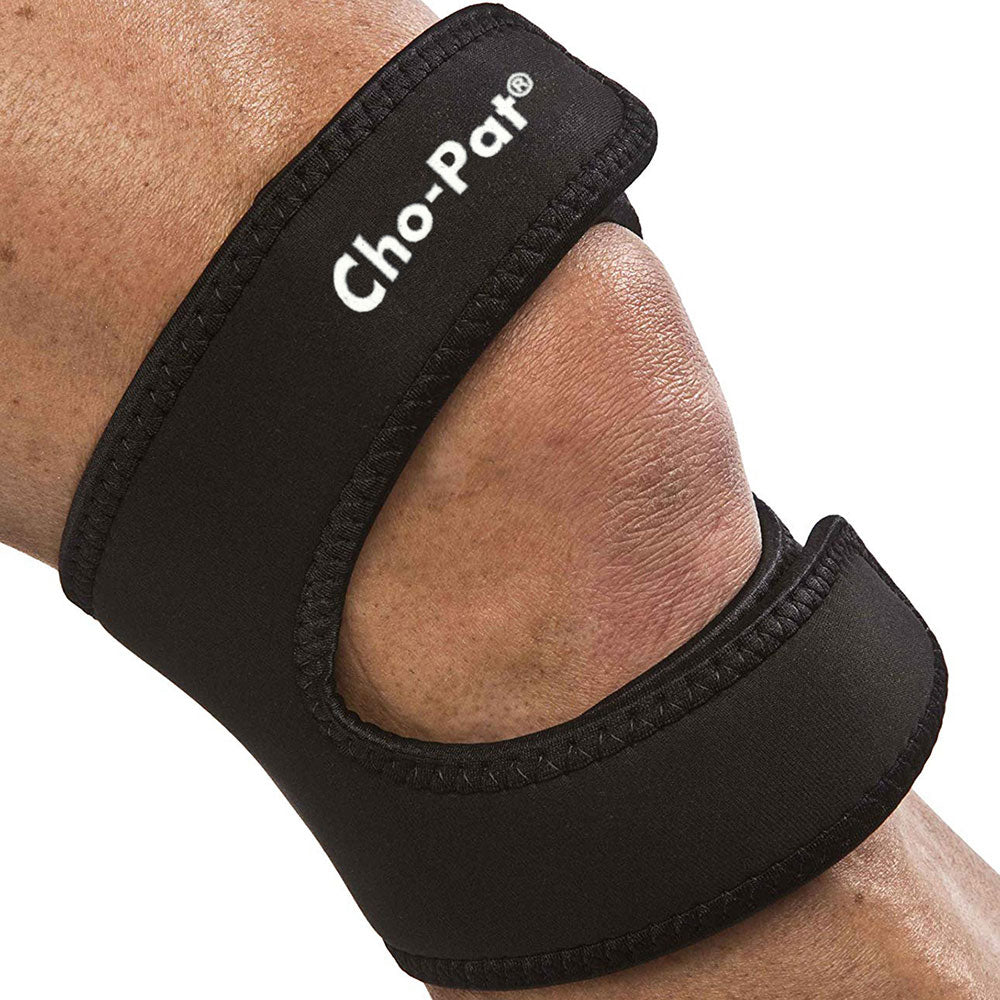
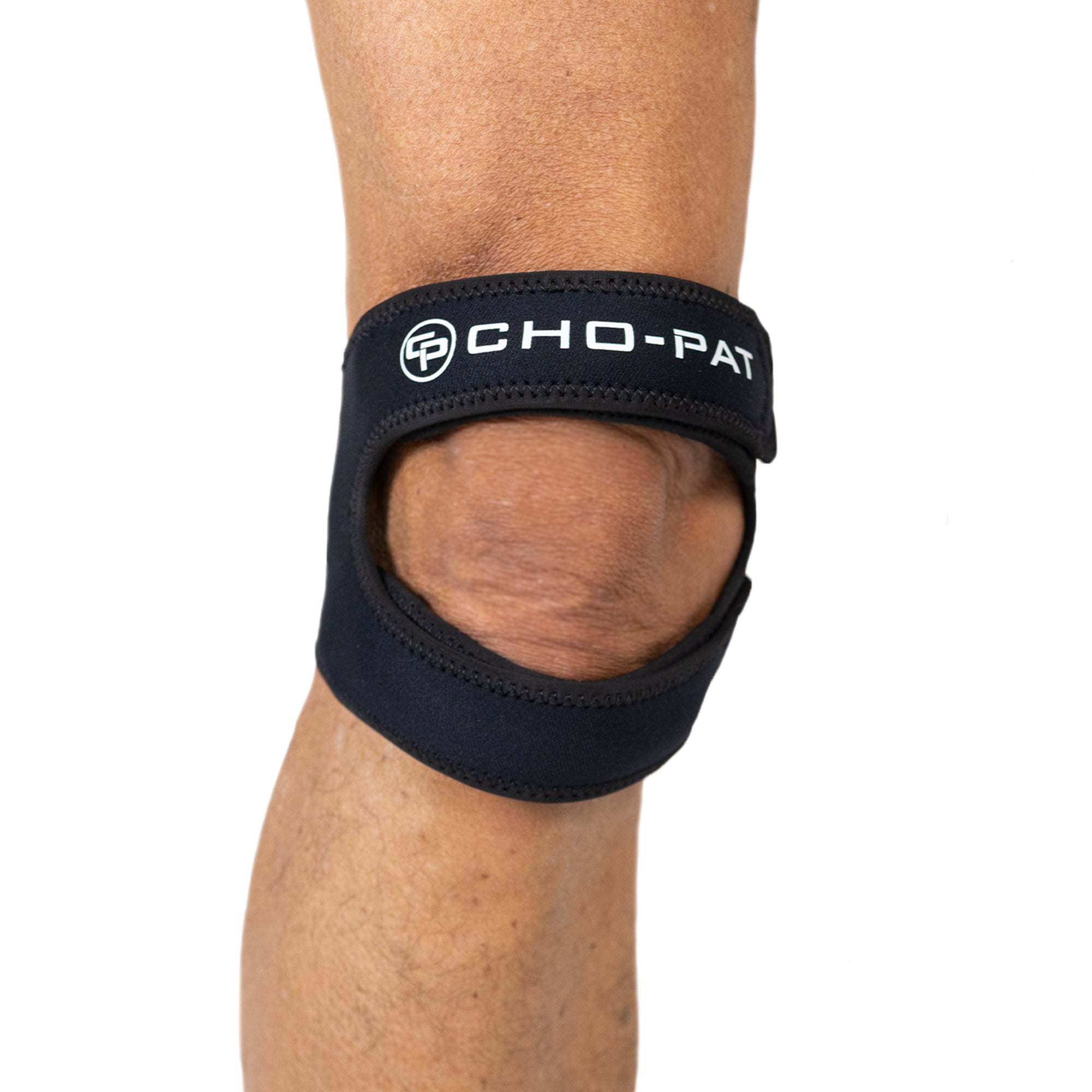
Some runners prefer support on both sides of the knee. Dual-strap designs provide support above and below the kneecap while keeping the patella uncovered. This provides more coverage than a single patella strap without surrounding the entire knee like a sleeve.
Compression Around the Entire Knee
If you prefer compression surrounding the knee rather than support focused on a specific area, a knee sleeve may better match your preferences.
More Structured Knee Support
If you need substantial stabilization, have experienced a significant knee injury, or have been advised to use a more structured brace, speak with a healthcare professional about which type of knee brace is appropriate. The location of pain alone should not be used to diagnose an injury or determine treatment.
How Tight Should a Knee Support Be?
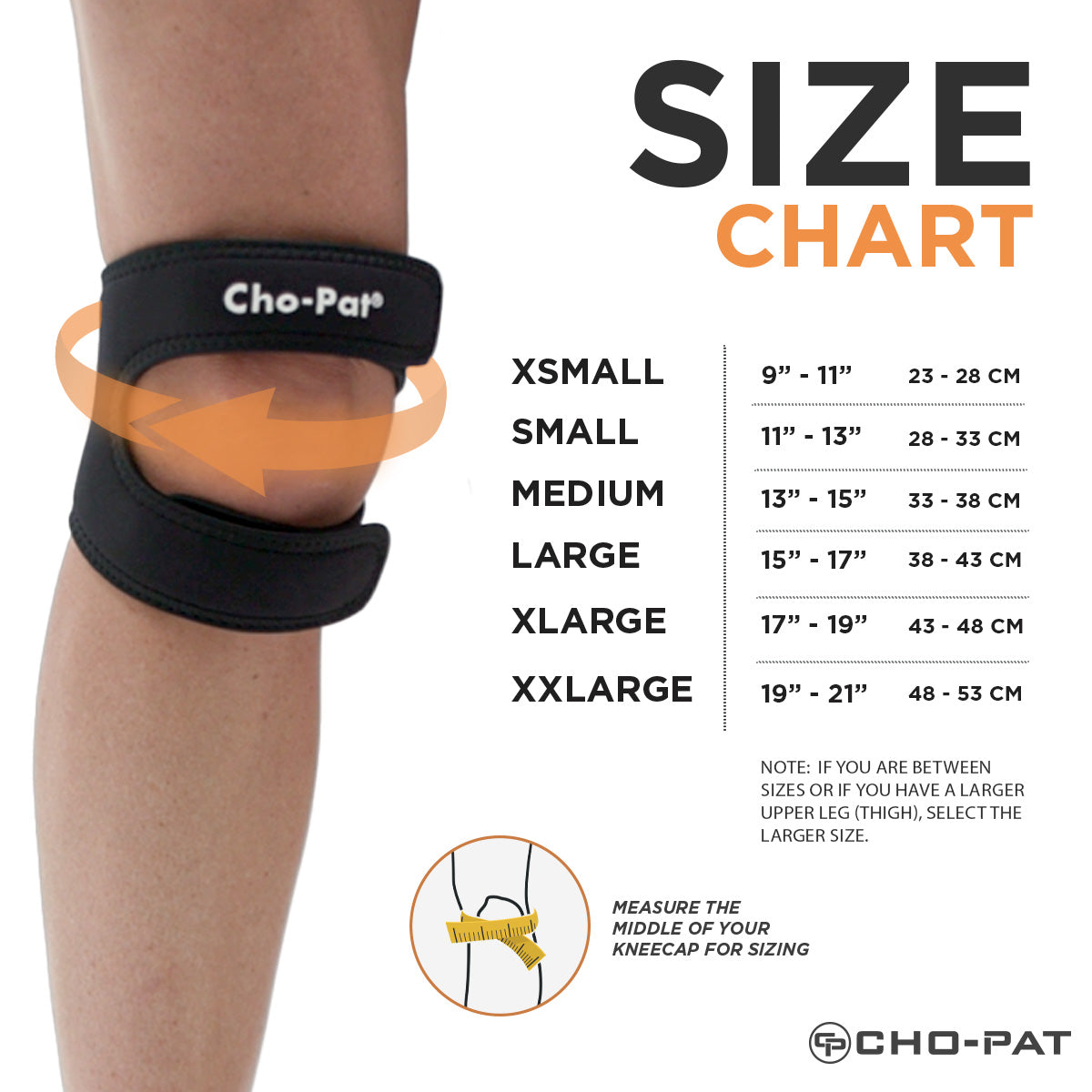
A knee support should generally feel secure without being excessively tight. The correct fit will depend on the type of knee support and the manufacturer's instructions. Proper sizing is particularly important for straps that are designed to apply compression to a specific location.
A support may be too loose if it repeatedly slides or moves out of position during activity. It may be too tight if you experience numbness, tingling, changes in skin color, increased discomfort, or excessive pressure. Always follow the sizing and fitting instructions provided with your knee support rather than simply tightening the product until it feels supportive.
Choosing a Cho-Pat® Knee Support for Running
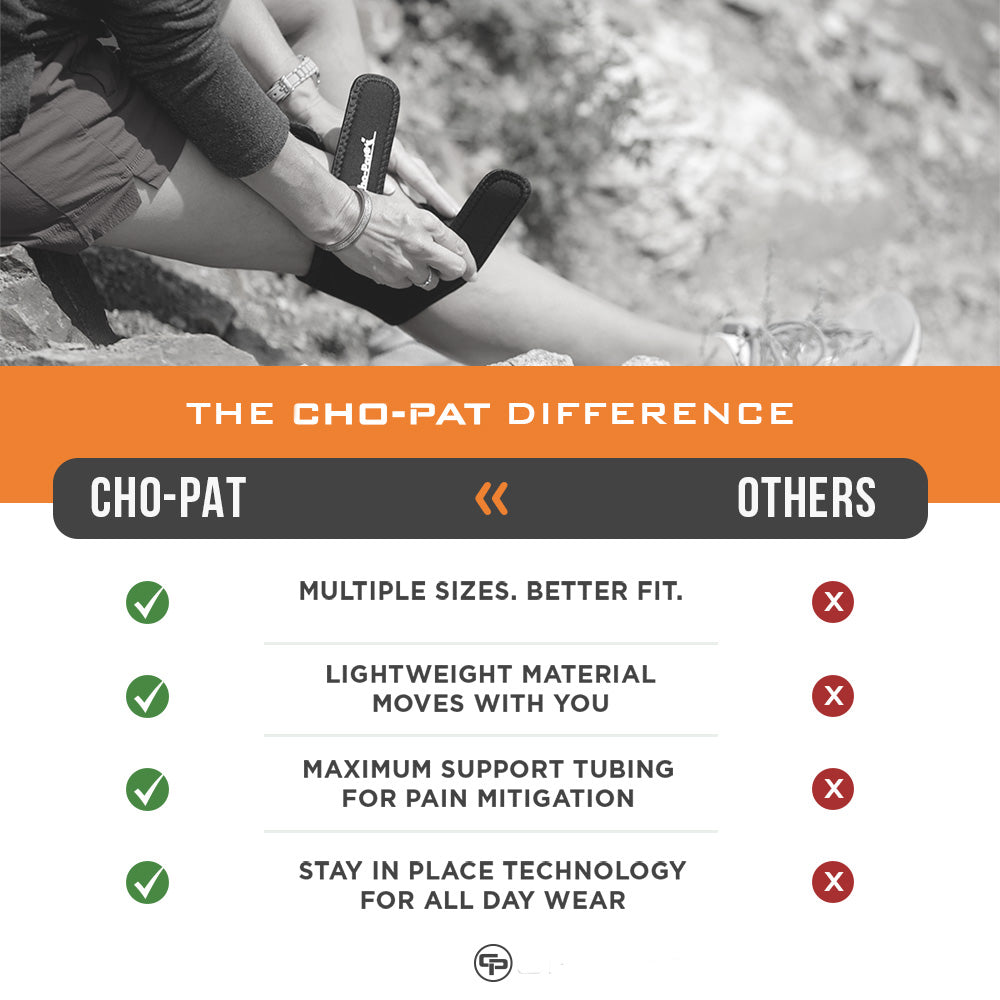
Cho-Pat® knee supports are designed to provide targeted support while allowing the knee to remain mobile during physical activity.
Different Cho-Pat designs provide support in different locations, so the appropriate option depends on the type and amount of support you prefer.
Cho-Pat® Patella Knee Strap


The Cho-Pat® Patella Knee Strap is a low-profile, one-size-fits-most strap designed to provide targeted support below the kneecap. Its single-strap design leaves most of the knee uncovered, making it an option for runners who prefer focused support with minimal coverage.
Best suited for: Runners looking for simple, targeted support below the kneecap.
Cho-Pat® Original Knee Strap


The Cho-Pat® Original Knee Strap also provides support below the kneecap but is available in multiple sizes for a more size-specific fit. Its low-profile design allows the kneecap to remain uncovered during activity.
Best suited for: Runners who want targeted below-kneecap support with multiple sizing options.
Cho-Pat® Dual Action Lite Knee Strap


The Cho-Pat® Dual Action Lite Knee Strap uses a lightweight dual-strap design to provide support above and below the kneecap. It leaves the patella uncovered while providing more coverage than a single knee strap.
Best suited for: Runners who prefer lightweight support above and below the kneecap.
Cho-Pat® Dual Action Knee Strap


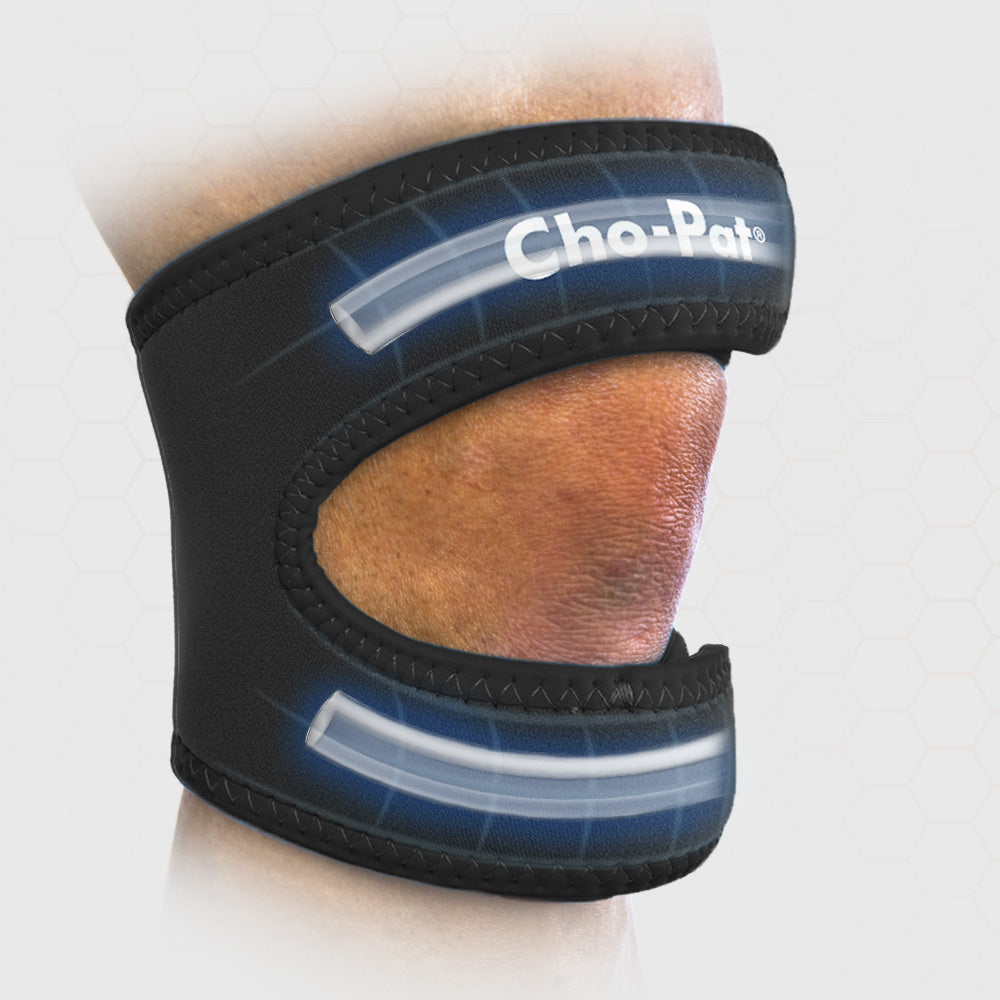
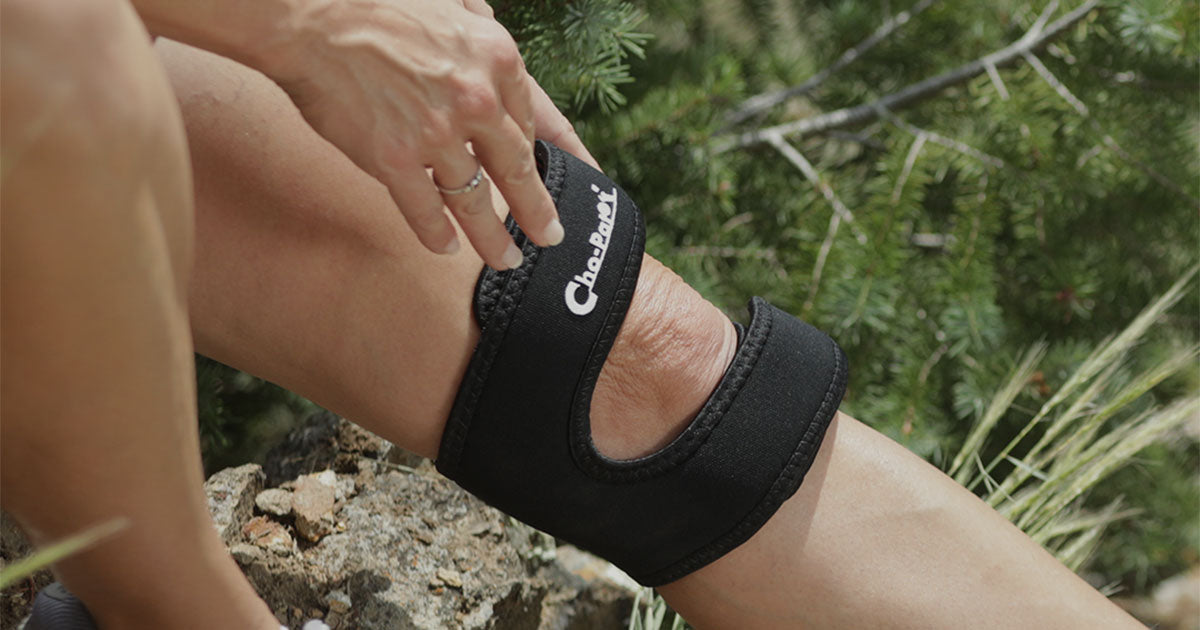
The Cho-Pat® Dual Action Knee Strap provides support above and below the kneecap using a dual-action design. The open-patella construction allows the knee to bend and move while the two straps provide support around the knee.
Best suited for: Runners looking for a dual-strap design with support above and below the kneecap.
Not Sure Which Cho-Pat Knee Strap to Choose?
We've created a complete comparison of the different Cho-Pat knee strap designs, including support location, design, materials, sizing, and other differences.
Learn more: Cho-Pat® Knee Straps: How Do They Work and When Should You Use One?
When Should You Talk to a Healthcare Professional?
Knee discomfort can have many different causes, and a knee support cannot determine why your knee hurts.
Consider speaking with a qualified healthcare professional if your knee pain:
- Is severe or persistent
- Began after a significant injury
- Is accompanied by substantial swelling
- Causes the knee to buckle or feel unstable
- Prevents you from comfortably bearing weight
- Includes locking or an inability to fully move the knee
- Continues to worsen despite reducing activity
A healthcare professional can evaluate your symptoms, identify the underlying cause, and recommend an appropriate treatment or rehabilitation plan.
A knee brace or strap may be one component of that plan, but it should not be considered a substitute for appropriate diagnosis and care.
Frequently Asked Questions About Knee Supports for Running
What is the best knee support for running?
There is no single knee support that is best for every runner. The appropriate design depends on where you want support, the amount of compression or coverage you prefer, your activity, and the reason you are using a knee support. Runners may choose from patella straps, dual-action straps, knee sleeves, wraparound supports, and more structured braces.
Do knee straps work for running?
Knee straps are designed to provide targeted compression and support while allowing the knee to remain mobile. Some runners prefer them because they provide less coverage than traditional knee braces or sleeves. How useful a knee strap feels can depend on proper fit, placement, activity, and the reason support is needed.
Should a knee strap go above or below the kneecap?
It depends on the design. A patella strap is generally worn below the kneecap, while a dual-action knee strap may provide support both above and below the kneecap. Always follow the manufacturer's placement instructions.
Can I wear a knee strap while running?
Knee straps designed for physical activity may be worn while running when properly fitted and used according to the manufacturer's instructions. The strap should remain secure without restricting normal movement or causing numbness, tingling, or increased discomfort.
Is a knee strap better than a knee sleeve for running?
Neither is universally better. A knee strap provides more targeted support with less coverage, while a knee sleeve typically provides broader compression around the knee. The better option depends on the type of support and coverage you prefer.
How tight should a knee strap be?
A knee strap should feel secure without being excessively tight. It should stay in position during activity without causing numbness, tingling, changes in skin color, or increased discomfort. Follow the manufacturer's sizing and fitting instructions.
Should I wear a knee brace if my knee hurts when I run?
Knee pain can have many causes, so a brace should not be used as a substitute for determining why your knee hurts. If your pain is persistent, severe, worsening, or associated with an injury, swelling, instability, or difficulty bearing weight, consult a healthcare professional.
Finding the Right Knee Support for Your Run
Choosing a knee support doesn't have to mean selecting the largest or most restrictive brace available. Start by considering where you want support, how much coverage you prefer, and whether the design allows you to move comfortably while running. A targeted knee strap may provide the level of support some runners are looking for, while others may prefer the broader compression of a sleeve or need guidance from a healthcare professional about a more structured brace.
Most importantly, listen to what your knee is telling you. A support can provide additional compression and stability during activity, but persistent knee pain deserves attention rather than simply being covered up by a brace.
PLEASE NOTE: The information in this article is for informational purposes only and should not be used as a substitute for professional medical advice, diagnosis, or treatment. Consult a qualified healthcare professional regarding knee pain, injuries, or questions about which type of knee support may be.